
Collection: ACR

ACR • Emergency beacons and safety
ACR emergency beacons, EPIRB, PLB and safety equipment
ACR EPIRB, PLB, SART, GMDSS radios, searchlights and lifejacket lights for recreational and commercial shipping
ACR has been making emergency beacons since 1956, and that is what it’s all about: when things go seriously wrong on board, help needs to arrive. More than 10,000 people have been found with an ACR beacon. When Apollo 13 ran into trouble, an ACR light was the only light the crew had left.
A 406 MHz emergency beacon sends your exact position to emergency services via satellites. Anywhere in the world, even outside of radio and phone range, and with no subscription required. An EPIRB is registered to the vessel and can deploy automatically if you sink. A PLB is worn on your lifejacket, ensuring you have it with you if you go overboard.
We also offer SART transponders to make your life raft visible on marine radar, GMDSS radios, lifejacket lights to ensure you are seen, and remote-controlled searchlights. Choose your category below, or feel free to ask us for advice.
-
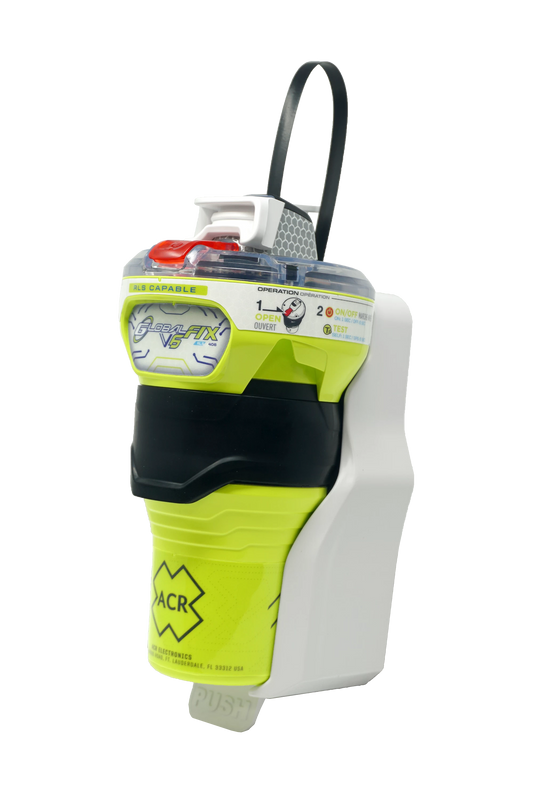
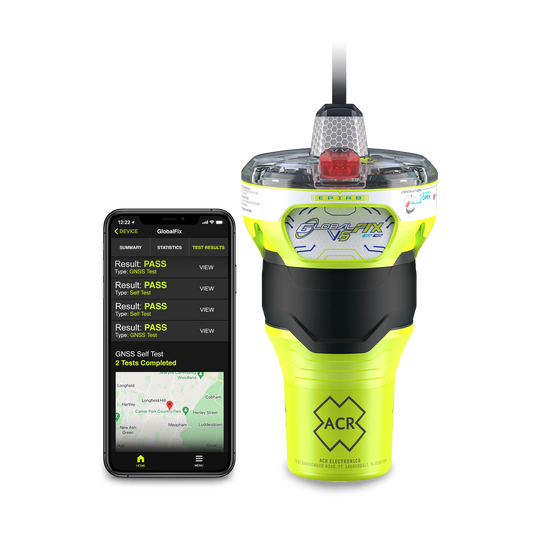
ACR GlobalFix V6 EPIRB Cat II with manual bracket
Regular price €929,28 EURRegular price -
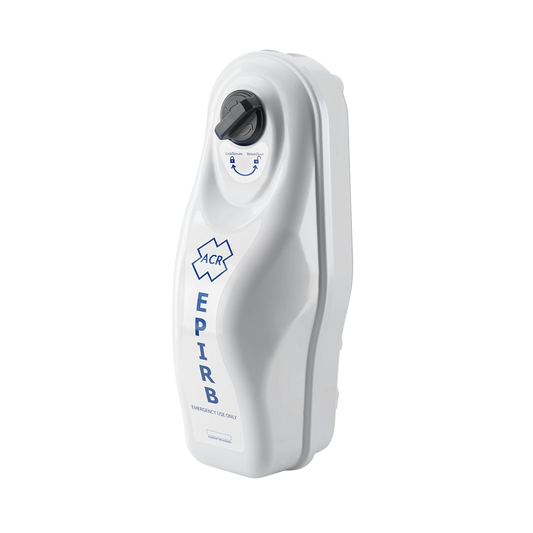
ACR GlobalFix V6 EPIRB Cat I with hydrostatic release housing
Regular price €1.132,56 EURRegular price -
ACR GlobalFix V5 AIS EPIRB Cat II with manual bracket
Regular price €1.098,68 EURRegular price -
ACR GlobalFix V5 AIS EPIRB Cat I with hydrostatic release housing
Regular price €1.301,96 EURRegular price -
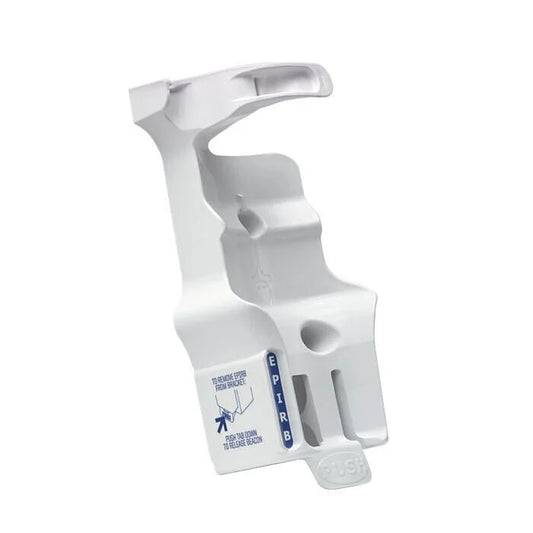
ACR LowPro Cat II mounting bracket for GlobalFix V5 and V6
Regular price €67,76 EURRegular price -
ACR replacement battery for GlobalFix V4 EPIRB
Regular price €222,64 EURRegular price -
ACR Sea Shelter 4 Cat I EPIRB housing for GlobalFix
Regular price €463,43 EURRegular price -
ACR LowPro Cat II mounting bracket for GlobalFix V4
Regular price €67,76 EURRegular price -
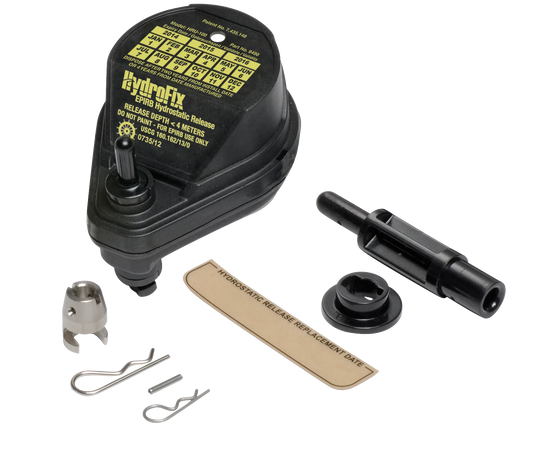
ACR HydroFix HRU hydrostatic release unit for Cat I EPIRB
Regular price €151,25 EURRegular price -
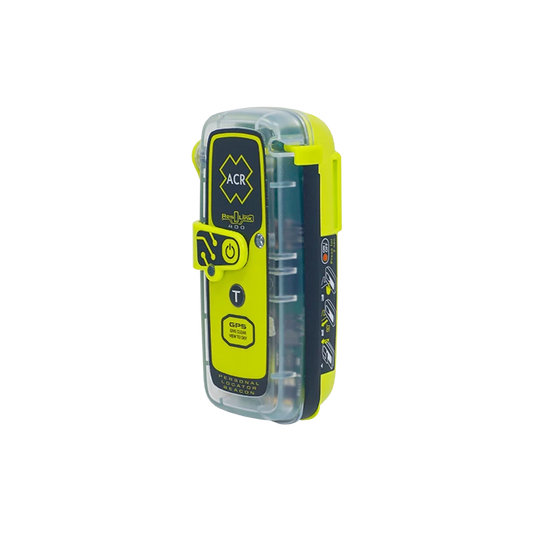
ACR ResQLink 400 PLB with multi-terrain clips
Regular price €517,88 EURRegular price -
ACR ResQLink View PLB with digital display
Regular price €611,05 EURRegular price -
ACR ResQLink 410 RLS PLB with Return Link Service
Regular price €556,60 EURRegular price -
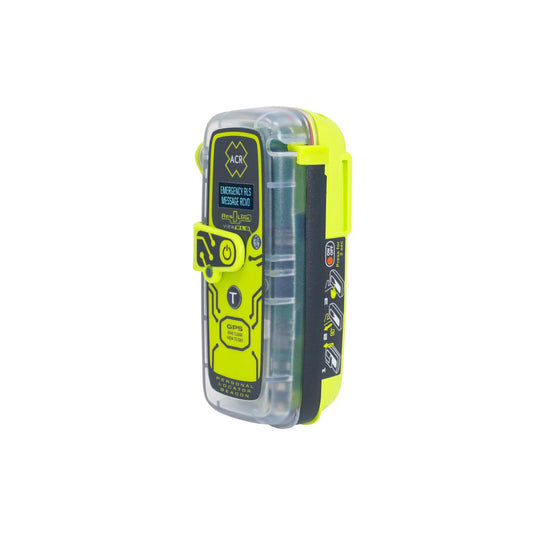
ACR ResQLink View RLS PLB with display and Return Link Service
Regular price €650,98 EURRegular price -
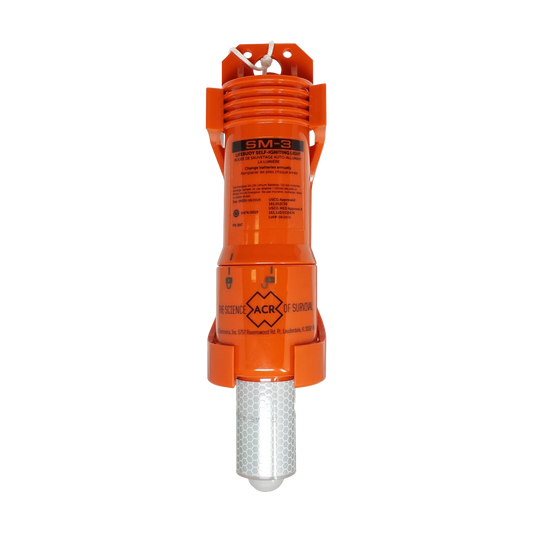
ACR SM-3 automatic COB lifebuoy marker light
Regular price €214,17 EURRegular price -
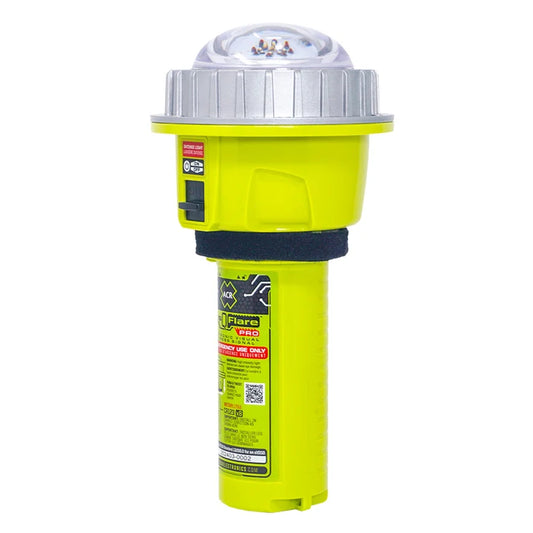
ACR ResQFlare Pro electronic distress signal with distress flag
Regular price €289,19 EURRegular price -
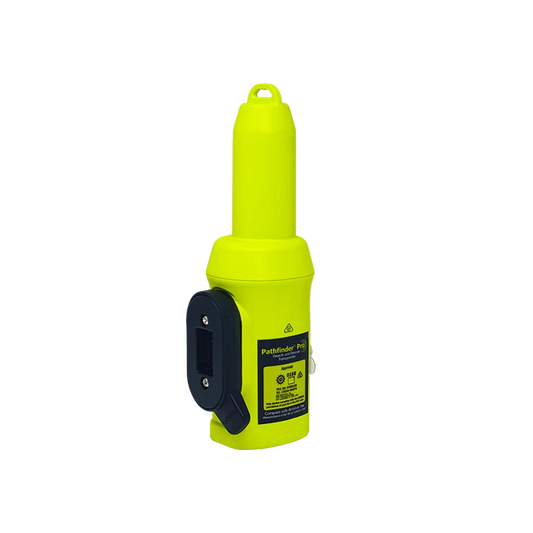
ACR Pathfinder PRO radar SART with battery
Regular price €861,52 EURRegular price












ACR safety equipment: which part do you need?
ACR has been building beacons since 1956 — the same company that made the flashlights used aboard Apollo 13 after the explosion. The marine range covers six groups, each answering a different moment: being found, being seen, and being able to call. Pick the group you need below.
EPIRB — GlobalFix V5 and V6
The beacon that belongs to the ship. On activation it sends a 406 MHz distress alert with your position through the Cospas-Sarsat satellite network. The V5 adds local AIS alerting so ships nearby see you on their own screen; the V6 is the same beacon without AIS. Both come as Category I, which frees itself if the ship sinks, or Category II, which you take out of the bracket yourself.
View EPIRBs and PLBsPLB — ResQLink
A PLB stays with the person, not the ship — and that is the whole point. A beacon still strapped to a sinking hull is no help to someone in the water. The ResQLink is small enough to live on a lifejacket permanently and it floats. The View models show your GPS position on a display; the RLS models confirm that your alert has been received. No subscription.
View EPIRBs and PLBsSART — Pathfinder
A liferaft gives almost no radar echo, so a searching ship sails straight past it. A SART fixes that over the last few miles. The Pathfinder PRO answers X-band ship radar and puts a recognisable line of blips on their screen. The Pathfinder AIS transmits its own GNSS position over AIS, so you appear as a target on any AIS display nearby.
View SART transpondersSurvival VHF — SR203 and SR303
A survival VHF is not a spare handheld. It hangs unused for years and then has to work: sealed primary battery, and it starts on channel 16 the moment you switch it on. It is built to be operated with wet hands or survival-suit gloves. Both models come as a standalone emergency unit and as a kit with a rechargeable battery and charger for everyday use aboard.
View survival VHF radiosSearchlights — RCL series
A steerable searchlight is the difference between guessing and seeing when you come alongside at night, look for a buoy, or have someone in the water. The RCL-50 LED gives over 100,000 candela and suits smaller boats. The RCL-100 LED sits at over 220,000, the RCL-95 at 460,000. The RCL-85 is the easiest to fit: only a power cable runs to the light, everything else is wireless.
View searchlightsLifejacket lights and signalling
A beacon brings help to your area. Over the last hundred metres, someone still has to see you — and a head in the water at night is close to invisible. The HemiLight 3 switches itself on in the water and fits almost any lifejacket. The Firefly PRO strobes flash for many hours. The ResQFlare Pro replaces a pyrotechnic flare with LEDs that keep signalling long after a hand flare has burnt out.
View lights and signallingCategory I or II, registration in the Netherlands, and keeping a beacon serviceable — open for the practical detail
Category I or Category II?
This is only about how the beacon leaves its holder. A Category I EPIRB sits in a hydrostatic housing that releases it automatically at roughly 1.5 to 4 metres of depth: the beacon floats up, gets wet and starts transmitting without anyone doing anything. A Category II EPIRB you take out of the bracket yourself. Both can also be activated by hand.
Category I is the safer choice further offshore, because it works even when nobody can reach the deck any more. Do bear in mind that a Category I installation needs a hydrostatic release unit with its own, shorter replacement interval. Which version is appropriate or required depends on your vessel, your area and the rules you sail under — put your situation to us and we will look at it with you.
Registration and certificates in the Netherlands
Both an EPIRB and a PLB must be reported to the Dutch regulator, the RDI, but in different ways. For an EPIRB you register the frequency use and are assigned an MMSI number that has to be programmed into the beacon; using an EPIRB also requires at least the Marcom-B operator certificate, taken at the CBR. For a PLB you apply for a licence instead of a registration, and no operator certificate is needed. The RDI only issues PLB licences for beacons with a Dutch country code (244, 245 or 246).
It is not free. Maritime registration and a PLB licence both carry a recurring annual charge, and a PLB licence also has a one-off issue fee. Tariffs are set per year and a digital application is cheaper than a paper one, so check the current amounts on the RDI website before you budget for it. As an official ACR dealer we help with the device details and with programming the identification code into your beacon.
When is a SART required?
Under SOLAS, cargo ships of 300 gross tonnage and upwards but under 500 must carry at least one radar transponder. Passenger ships, and cargo ships of 500 gross tonnage and upwards, must carry at least one on each side. For pleasure craft there is no such general requirement — whether a SART makes sense for you depends on your area and how you sail. Sometimes a beacon with AIS is the better spend, and we will say so. Check anything mandatory with the body that surveys your vessel.
Keeping a beacon serviceable
A beacon does nothing for years and then has to work in one go. Three things belong in your maintenance schedule: the battery replacement date on the label, the hydrostatic release on a Category I housing, which has its own shorter interval, and the self-test as described in the manual for your model. Never activate a beacon for a "real" test — an accidental alert starts a search. If it does happen, tell a coastguard centre immediately.
Batteries are replaced by an authorised ACR dealer or battery replacement centre, which retests the beacon afterwards. We also supply the original brackets, housings, antennas, batteries and parts — including for ACR equipment a generation or two old, so you can keep a working beacon in service instead of replacing it.
Which combination suits your boat?
- Inland water and close inshore: a PLB per person on board is often a sound start.
- Crossings and offshore sailing: an EPIRB as the base, preferably with a PLB per person — a beacon that stays with the ship does not help someone who goes overboard.
- Commercial vessels under GMDSS: a SART and a survival VHF on top of that.
- Always: a lifejacket light and a signalling device, so you are seen on the last stretch too.


