
-

 €410 below RRP
B&G NAC-2 VRF Autopilot Core Pack
Regular price €1.343,96 EURRegular price€1.754,50 EURSale price €1.343,96 EURIncl. €200 extra Ultimate Upgrade discount
€410 below RRP -
Simrad Motor Assembly for TP Series
Regular price €205,51 EURRegular price€233,53 EURSale price €205,51 EURSale -
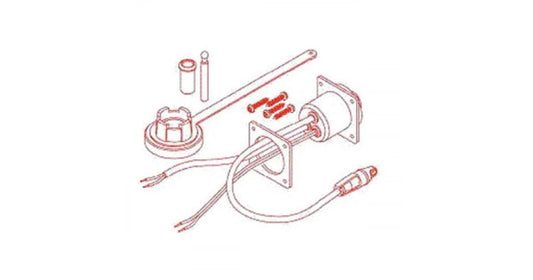
Simrad TP series tiller pilot spare parts kit
Regular price €39,92 EURRegular price€45,36 EURSale price €39,92 EURSale -
Simrad Main PCB for TP22/32 and WP32
Regular price €205,51 EURRegular price€233,53 EURSale price €205,51 EURSale -
Simrad plug, socket, and mounting pin for TP32/22
Regular price €175,69 EURRegular price€199,65 EURSale price €175,69 EURSale -
Simrad pushrod end cap, set of 5
Regular price €36,49 EURRegular price€41,47 EURSale price €36,49 EURSale -
Simrad tiller pilot tiller pin and mounting bush
Regular price €38,77 EURRegular price€44,06 EURSale price €38,77 EURSale -
Simrad drive assembly for TP32
Regular price €493,00 EURRegular price€560,23 EURSale price €493,00 EURSale -
Simrad main PCB for TP10
Regular price €186,34 EURRegular price€211,75 EURSale price €186,34 EURSale -
Simrad Tiller Pilot 32, SimNet/NMEA
Regular price €1.081,84 EURRegular price€1.229,36 EURSale price €1.081,84 EURSale -
Simrad Tillerpilot 22, SimNet/NMEA
Regular price €895,84 EURRegular price€1.035,76 EURSale price €895,84 EURSale -
Simrad Tillerpilot TP10
Regular price €740,04 EURRegular price€840,95 EURSale price €740,04 EURSale -
Simrad Tiller Bracket 90 mm (3.5 in)
Regular price €45,62 EURRegular price€51,84 EURSale price €45,62 EURSale -
Simrad Tiller Bracket 60 mm (2.4 in)
Regular price €45,62 EURRegular price€51,84 EURSale price €45,62 EURSale -
Simrad Tiller Bracket 30 mm (1.2 in)
Regular price €45,62 EURRegular price€51,84 EURSale price €45,62 EURSale -
Simrad Tiller Bracket 120 mm (4.7 in)
Regular price €45,62 EURRegular price€51,84 EURSale price €45,62 EURSale




Simrad: for powerboats and sportfishing
Simrad and B&G share their hardware — the same radars, the same network, the same displays under the skin. The software is what differs: Simrad does sonar, engine data and fishing, B&G does sailing. On a powerboat you would never open B&G's sailing pages, so this is where you want to be. Seven groups, pick yours.
Chartplotters and MFDs
From 7 to 24 inches. GO7 XSR and GO9 XSE for a sloop or smaller powerboat — echosounder, GPS, wifi and a radar connection built in. NSX (7", 9", 12", plus 12" and 15" Ultrawide) with modern controls. NSS 4 (10", 12", 16") is the current flagship: touchscreen and physical keys, HALO radar, NMEA 2000 and ethernet. NSS evo3S is the generation before, and NSO evo3S the glass-helm setup with a separate processor and MO touch monitors.
View chartplottersSonar and transducers
The transducer decides what you see, not the screen. HDI gives 2D sonar plus DownScan — a sharp slice directly under the boat, but nothing to the sides. Active Imaging 3-in-1 adds SideScan, so you also see what lies beside your track. ForwardScan looks ahead instead of down, which is how you spot a shoaling bank before you are on it. For heavier work there are the S3100 and S3100H modules and StructureScan 3D.
View sonar and transducersHALO radar
Closed domes for smaller boats: HALO20 up to 24 nautical miles, HALO20+ up to 36 with dual range and 60 rpm, HALO24 up to 48. Above that, open array: the HALO 2000 series (3, 4 or 6 ft, 50 watts, up to 72 miles) and the HALO 3000 (4 or 6 ft, 130 watts, up to 96 miles) with Bird+ mode that picks up bird flocks at around 8 miles — which for the sportfishing crowd is the whole reason to buy one.
View radarAutopilots
Simrad covers outboards properly, which not every brand does. The NAC-1 packages are built for outboard hydraulic steering, and there are steer-by-wire kits for Volvo and Yamaha plus the SteadySteer parts for Verado engines. For inboards, the NAC-2 and NAC-3 computers with AP44, AP48 or OP12 controls. Tiller boats get the TP10, TP22 and TP32.
View autopilotsVHF and AIS
The RS range runs from the compact RS20S to the RS100 system with a separate handset. Two worth knowing: the RS40 receives AIS so other ships appear on your plotter, and the RS40-B has a Class B AIS transponder built in, so you transmit too. That -B is the whole difference, and it is what makes commercial traffic see your name and course on their own screen.
View VHF and AISInstruments and engine data
The IS35, IS42 and IS42J are the compact gauges for a powerboat helm: engine data, fuel consumption, depth and speed on one display instead of a row of separate dials. The IS42 also comes as a speed-and-depth package so the sensors match the display. Add a gateway and the engine itself reports in — see NMEA 2000.
View instrumentsNetwork, cables and accessories
Everything hangs together on two layers: NMEA 2000 for the small continuous data, ethernet for radar and sonar imagery. We stock backbone kits, tees, terminators, ethernet cables and the RJ45 adapters, plus the power and ethernet cables for the HALO 2000 and 3000. Have older SimNet equipment? The adapter kits bring it onto a Micro-C network instead of replacing it.
View NMEA 2000Which series, which charts, which transducer — and the one to check before you order — open for the comparison
Which chartplotter series?
| Series | Sizes | Made for |
|---|---|---|
| GO7 XSR / GO9 XSE | 7", 9" | Sloop, open boat, smaller powerboat. Echosounder, GPS and wifi built in, plus a radar connection. Runs charts from more than one brand |
| NSX 3007 / 3009 / 3012 | 7", 9", 12" | Modern controls, sonar to choice. Mind the charts — see below |
| NSX 3012UW / 3015UW | 12", 15" | Same series in widescreen, for two panels side by side |
| NSS 4 | 10", 12", 16" | Current flagship: touchscreen and physical keys, HALO radar, NMEA 2000 and ethernet. With or without built-in sonar |
| NSS evo3S | 9", 12", 16" | The trusted generation before. Still the logical pick when you are extending an existing evo3 system |
| NSO evo3S Glass Helm | 16", 19", 24" | Separate processor (MPU) with MO touch monitors, for a built-in helm with one or two screens |
Charts: check this before you order
Chart support differs per series and it is worth knowing in advance. The GO series runs charts from more than one brand. The NSX series works with C-MAP DISCOVER X and will not take a Navionics card. If you have just bought an expensive regional chart, tell us which one — then we will look at which model it works with, rather than you finding out after the box is open.
Whichever you pick, the world base chart that comes in the box is too coarse for Dutch waters. For the Wadden, Zeeland, the Baltic or the Mediterranean you put a regional C-MAP card in the microSD slot. Tell us your area with the order and we will include the right one.
HDI or Active Imaging?
The GO and NSX models come in three versions: without transducer, with HDI, and with Active Imaging 3-in-1. HDI gives 2D sonar plus DownScan — depth and bottom structure directly beneath you, which is enough for most boating. Active Imaging adds SideScan, so you also see what lies to the left and right: useful for finding an anchorage, a structure, or fish.
Already have a transducer in the hull? Then take the version without — it saves money and a second through-hull. Not sure what is fitted, send us a photo of the plug and we will identify it.
Sizing an autopilot pump
By hard-over time, not by feel: how long the rudder takes from full port to full starboard. The rule of thumb is 10 to 16 seconds. Slower and the pump is undersized, which you notice at once in a following sea; faster and it steers restlessly and draws more current than it needs. Send us the capacity of your steering cylinder and we will work it out before you order. On outboards and sterndrives, where a rudder feedback sensor is hard to fit, the VRF versions solve it — the system infers rudder position instead of measuring it.
Can I connect two screens?
Yes. Over the network the screens share the same charts, routes and sensor data — set it once and see it on both, for instance one at the helm and one below. Radar and sonar imagery run over ethernet, the rest over NMEA 2000. If you need more ports than your display has, there is a network expansion port and a seven-way distribution box.


